2023 Yankees Season

It’s been a while since I last posted (do people even read or write blogs anymore?), but its tough to watch this past Yankees season and not have some thoughts, so I figured I would jump back into it with a review of the Yankees around the diamond.

With that in mind, let’s start behind the dish.

Coming into the season, New York had reason to be optimistic about their options at catcher. Jose Trevino was coming off an all star season, a gold glove and had just enjoyed his best offensive season since the COVID-shortened 2020 campaign. While he was turning 30, and some regression on offense was surely expected, most were quite comfortable penciling in Trevino for something like 100-120 games as the starting catcher heading into 2023. As expected, Trevino’s bat took a step back in 2023, his glove was still solid, logging (according to Fangraphs 12.9 runs saved in 2023 compared to 29 in 2022 in just over half as many innings.) What torpedoed Trevino’s season was that lack of availability on the field. A wrist injury bothered the catcher from spring training onward, and finally forced him onto the DL for season-ending surgery in July. Some age related decline will hopefully be offset by a rebound from injury next year, and the glove will still make him a solid contributor going into next season.

Backing up Trevino was Kyle Higashioka, and he delivered a pretty similar season in 2023 as he did in 2022. Kyle offers solid pop for a catcher, but not a ton else offensively. He bat has graded out as below average the last 3 season, albeit with some batting-average driven improvement each season. His glove was again solid, and he was a perfectly acceptable backup catcher. In 2023he was pressed into more regular playing time, and while it wasn’t a disaster, he was below replacement level according to bWAR. Fangraphs had him pegged at a more rosy 1.7 WAR…a realistic assessment of somewhere in between seems fair. Kyles’s turning 34 next season, so what you see is what you get here – a solid backup catcher who is stretched in a starting role. The presence of the next two guys likely means that he’ll be a backup for another team next season, but offseason trades could change that outlook.

Ben Rortvedt took over the backup duties when Trevino went down, and his bat left a lot to be desired, while the glove was solid despite some very public hiccups with Gerrit Cole during their games together. Injuries have derailed what the Yankees hoped to be a promising career, and at 26, Ben’s window to develop into much more than a backup catcher is quickly closing. Rortvedt as the backup next season is workable depending on what the Yankees see in Austin Wells after his September audition, but it would be tough to envision breakout from him at this point.

Wells is the wild card here. While the bat was always likely to carry him and provide most of his value at the big league level, questions have lingered around his glove, and whether the bat would still hold up playing first or and outfield corner if he couldn’t stick at catcher. After a relatively slow start in his end-of-season call up, Wells bat seemed to come alive, flashing signs of power as the season wound down. The glove seemed acceptable to the naked eye, but small sample size impacts that view pretty significantly. Statistically, Fangraphs saw his glove as a negative during that limited time, so the questions will remain heading into next season. It is telling that the Yankees gave him significant time behind the plate though, and they seem committed to seeing if he can deliver value from the position. An offense/defense, left/right platoon between him and Trevino would not be the worst risk to take heading into next season considering the needs around the rest of the roster, and you have to believe that the Yankees will give Wells every chance to develop into an everyday offensive weapon given Trevino’s offensive shortcomings.

Thanks for reading, and feel free to comment on anything I’ve missed. Next up we’ll take a look at first base for the Yankees.

Baseball Better not Blow It

So long time, no post.  Just some thoughts that have been going through my head with the lack of baseball, but the promise that it might be coming soon.  The title says it all, and as much as there is plenty of (potential) blame to go around, it seems to me that the Player’s Union has been thoroughly out-maneuvered and has a lot more to lose if an agreement can’t be reached to get games moving again.

Its a repeat of the Millionaires v. Billionaires war from the 1994-95 Strike, but with a twist.  The owner’s have provided a road map to the players and fans to bring baseball back this summer.  It will be without fans, it will be a shortened season, with bastardized divisions, but it will be baseball.  The country desperately wants this to happen, and seem ready to accept it in whatever form possible.  Anything else is just details.

One of those key details is compensation.  The owner’s stand to lose money by staging games without fans, and the players have been asked to share that cost.  To the average person right now, stuck in their home since March watching Korean baseball and E-sports, that seems like an awfully small price to pay.  If the players hold up the plan based on something as ugly as money, they become the bad guys in the story.  The owners are willing to take their lumps, but the players just won’t play ball.

Its not fair to the players, but its how this will play out.  And statements by players like Blake Snell have give the fans obvious targets.  If their argument was that they feared for the health of themselves, their families, and the families of all the staff who would be asked to endanger themselves, it would make perfect sense, and would much more clearly align with the concerns of everyday Americans.

Instead, fans see a guy slotted to make $10 Million, who’s already made more in the few short year’s of his professional career, and who is getting paid to play a game complaining that he’s going to only make a couple of million instead.  That isn’t going to sit well with many people, and if games are not played this year because a compromise can’t be reached, the damage to the sport is going to be deep and lasting.

Random Thoughts on Defense

With Hall of Fame voting going on right now, I’ve spend some time thinking about defense, and how it impacts a players overall value.  Players like Derek Jeter and Gary Sheffield have their overall value significantly impacted by poor defensive performances, while someone like Andruw Jones builds a borderline Hall-of-Fame case from exception performance.

There is no denying that defense plays a part in overall value, and obviously contributes to a team’s success or failure, and therefore can’t be dismissed from an evaluation of the player.

At what point though is this “not fair” to the player.  Derek Jeter remained at shortstop for his entire career, despite poor fielding numbers.  Gary Sheffield and Manny Ramirez spend most of their careers in the outfield, Bernie Williams and Jorge Posada remained at premium defensive positions long after the numbers made it clear that they had lost an edge there.  These decisions, while certainly impacted by the player (directly or indirectly) were ultimately management’s decision.  Joe Torre and Joe Girardi kept running Derek Jeter out to short, and they didn’t have to.

Derek Jeter almost certainly should have been moved off of shortstop years before his career ended – I remember discussing it when Alex Rodriguez first became a free agent that it was a perfect opportunity to sign the superstar, and move Jeter to the OF where his defense would have been less impactful.  Similarly, after Carlos Beltran finished driving the Astros to the playoffs in 2004, I called for signing him and shifting Bernie Williams into a corner or DH slot.

In these, and other cases, the Yankees (for various reasons) did not.  So again, the “fault” for the negative defensive contributions really does need to lie at least partially with the team, not the player.  When it is clear someone can not do a job in the workplace, you do not keep them in the same spot – you either reassign them or replace them.  The Yankees had that option, and chose to maintain the status quo for years.  We can argue whether or not that was the right move, and that Jeter’s production at the plate justified it, or that moving the Captain would have been an unnecessary distraction, or a hundred other issues, but the point remains that Jeter was placed in a role ill-suited for him, and his overall stats suffered accordingly.

Now – Jeter will go into the Hall of Fame with no issue, and most of those who vote for him will either do so with firm knowledge that his bat outplayed his glove (or blind faith to the Gold Gloves he “earned” earlier in his career), so this might seem like a non-issue.  But for someone like Sheffield, he is getting dinged for his defense – taking significantly away from a fantastic offensive profile, simply because his teams were slow to move him down the defensive spectrum (first off of 3rd where he was historically terrible, and eventually out of the outfield.)

Stupid Unrealistic Thought of the Day

Just a thought given the Marlins and Rays inability to consistently draw well and maintain solid teams for more than a few seasons at a time once the guys get expensive.  Move one of the teams (Montreal, Portland, wherever), and make the remaining team a Florida team – splitting games between Miami and Tampa (with a few thrown in in Orlando at the Wide World of Sports Complex maybe?).  This would have worked better before the Marlins secured a brand new stadium I think, but it would certainly be easier to fill each ballpark 35-40 times a season than 81.  Build a new park in the Tampa area, but lower capacity, lower cost than what most brand new parks are, and just work on filling each park for half a season.  As I recall, the Rays actually do pretty well in TV viewership, so its not like the fans aren’t out there – doing something like this might be more cost effective than the current arrangement.  And if you play a couple of games a year in other locations (Disney, maybe a college/spring training park in one of the other cities in the state) it will help build a regional fanbase.


Like I said, stupid idea of the day, but would be interesting to see.  If it worked, some other marginal cities might make sense for a split team – Nashville/Memphis, Norfolk/Charlotte, and places like that where they’re border-line MLB towns, and it might push it over the edge.

BBWAA Awards Dinner

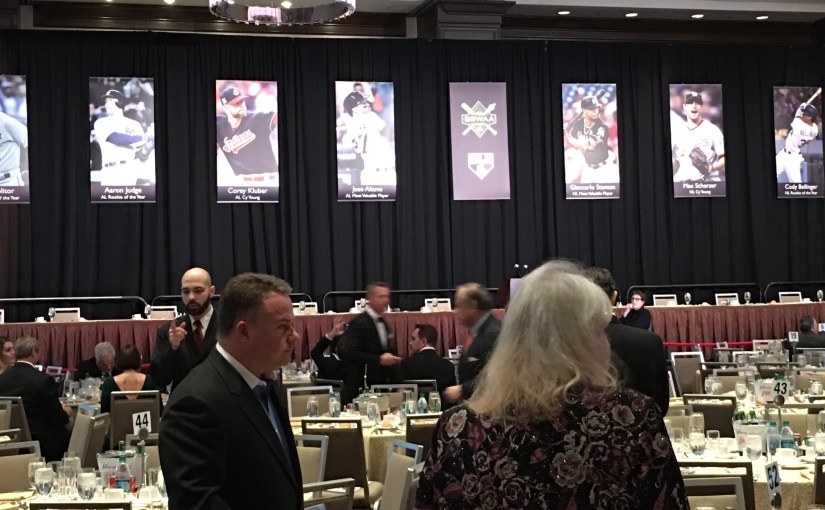
It’s been a while since the last post, but last night I had the opportunity to attend the BBWAA Awards Dinner in New York City. It was a once in a lifetime event that I’d love to make an annual tradition.

As a newly minted Board Member for the Bob Feller Act of Valor Award Foundation (more on that another time – but please do visit and learn more here), I was there on business. Representing the organization we worked to make connections with players and personnel throughout the industry.

At the same time, it was again a chance to be a fan. Among the writers and players, agents and front office personnel, a small but significant group of children accompanied their parents. Watching their joy at seeing Jose Altuve and Aaron Judge receive their awards, and cornering Carlos Beltran in the lobby for an autograph was an experience in and of itself. While I didn’t indulge myself, I wasn’t too far away from the young kid who asked Bernie Williams for an autograph 20 years ago.

Last night was a reminder of what baseball can be. It wasn’t a night talking about stats and value, free agent markets and trade rumors, but a celebration of the Game, The Players, and The Fans.

Greg Bird and 2017

Last season, Yankee fans got a taste of the future when Greg Bird stepped in to fill the injured shoes of Mark Texeira.  Coming into this season, the picture for Bird was less clear, with relatively strong seasons out of Texeira and Alex Rodriguez – leaving the Yankees seemingly set at 1st and DH – the two easiest spots to get Bird At-bats.  Still, given the recent history of the two, it was easy to imagine Bird getting from 300+ Plate Appearances with the big league club if you assume that at least one of Texeira or Rodriguez would miss time with injury (which seems all too likely).

Chance had a different plan in mind, and Bird is now expected to miss all of 2016 with a shoulder injury.  Based on my assumption that Bird would have gotten plenty of reps filling in for the Yankees’ DH and first-baseman, this would seem to be a big hit for the team’s 2016 chances.

I would argue that is not the case – the team has done a well the past few off-seasons at building a solid bench to compliment an aging lineup.  This is a welcome trend from the last decade, when the bench and bullpen (at least the portion not name Mariano Rivera) seemed like an after-thought, or at best where formerly decent players went to die.

While losing Bird obviously impacts the team’s depth, it should be remembered, the plan was to start him at AAA – of the Yankees potential reserves, he profiled as the best hitter – but his own defensive limitations would have made a roster spot for him a luxury the team couldn’t afford.  If Bird could man third and the outfield corners with some ability, he would have been a very useful addition to the bench (along with acting as the emergency catcher – his original position on draft day.)  Building up that versatility may have helped the team in the short term, but you could just as easily predict that time spend learning new positions would have detracted from Bird’s growth as a hitter.

Instead, the Yankees projected bench is much more flexible.  Gary Sanchez as the likely backup catcher is an unknown quantity, but he has been making steady progress the last few seasons.  Having a backup catcher who can hit is a bonus – especially in comparison to the string of defense-first backup catchers the Yankees seemed to employee in a string from Joe Girardi until JR Murphy (and to an extend Francisco Cervelli – though injuries limited his utility.)

Aaron Hicks has big shoes to fill after the last season and a half of Chris Young’s somewhat unexpected productivity.  His combination of athleticism and upside would have him starting on a number of teams, and he should be able to adequately cover injuries to Gardner and Ellsbury with limited declines in production – hopefully his presence alone as a spot starter will help keep all 3 outfielders healthy and fresh deep into the season (and avoid the seemingly annual Brett Gardner second-half fade.)  Carlos Beltran’s creaky everything will need frequent time off as well – but in his own way, he represents decent depth for the first base and DH options.  If either Texeira or Arod go down or need a day off, Beltran to DH and Hicks in the Outfield makes all the sense in the world.  The only thing that would improve this option would be some willingness to use either Beltran or Rodriguez at fist base.  Despite last years experiment that went no where, I would be willing to bet that one or both of them would make adequate options there – significantly increasing the Yankees ability to adapt to injuries and even the opportunity to rest Texeira and others.

Dustin Ackley is the key reason why the Yankees might not miss Greg Bird this season.  Fangraphs recently tabbed Ackley as the second best backup in the American League this year (based on their projections.)  His combination of flexibility around the diamond (appearances at 5 different positions), flashes of offensive ability, and first round pedigree make him a strong addition to the team’s bench.  In virtually any scenario where Texeira or Alex Rodriguez get hurt, Dustin Ackley is likely to pick up a large amount of At Bats – while he’ll also get some time in the outfield – where he and Hicks can supplement each other very neatly.

The last spot on the bench seems likely to come down to Pete Kozma v. Rob Refsnyder.  I’m already on record as saying I would have given Refsnyder the 2B job (with support from Ackley at the keystone as well.)  The only advantage Kozma brings to the table is his ability to play short.  The backup short stop on the roster will be Starlin Castro however, so having  dedicated caddy for Didi Gregorious would be a waste of resources if the player didn’t add much else – which Kozma does not.  Refsnyder meanwhile represents strong upside with the bat – coupled with flexibility around the diamond.  There is talk of getting him reps at third base this spring, and this combined with his previous experience in the OF makes him the superior choice for that last spot on the bench.

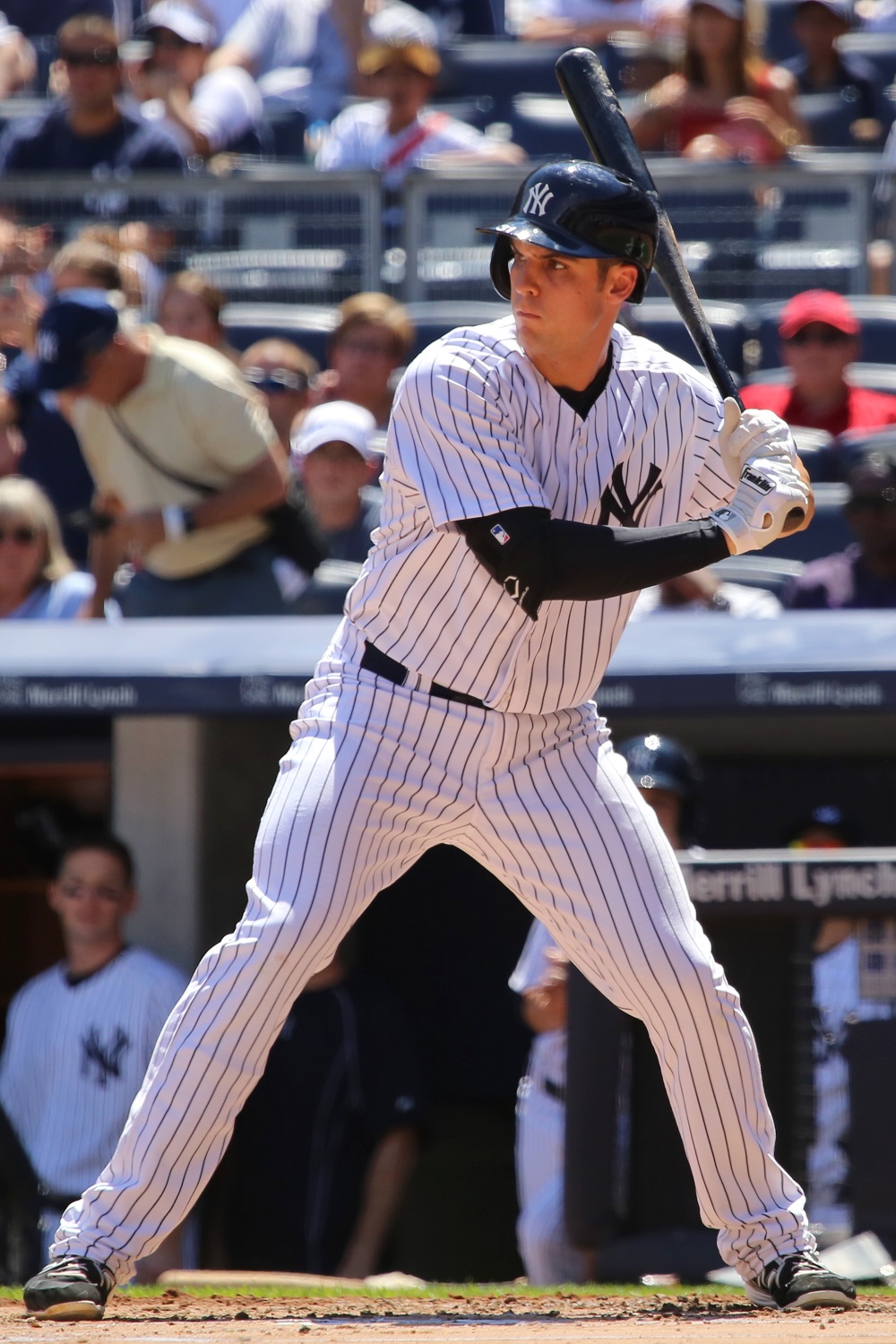
Based on that assessment – what do the Yankees really lose without Bird?  The problem is not so much the production/insurance for 2016, but the chance to see ahead to 2017.  Whether the at-bats came at AAA or Yankee Stadium, 2016 would have been a big year for Bird to prove himself ready for a full time starting job, all the more important given Texeira’s expiring contract at the end of the year.  As it is now, the Yankees will have to make a decision to retain Texeira, hand the starting job to Bird, or look outside the organization for help.  Even a repeat of last season should leave the Yankees gun-shy when talking about renewing Texeira’s contract.  While he’ll be remembered fondly for 2009 and the rest of his Yankees career – his declining batting average and increasing fragility do not add up to a good investment moving forward.  Bird as the heir apparent was the obvious, easy choice – but now the Yankees will have to make that decision with limited data instead.  The real cost of Greg Bird’s injury might not become known until Opening Day 2017.Greg_Bird_on_August_22,_2015


Back in Business for Spring Training

Well, that preview went nowhere.  But 2016 Spring Training is here, and we’re ready to hit the field again.

A few quick notes on the Yankees off-season.  Much has been made of the team’s failure to sign a big league free agent, and it certainly is unusual for the Yankees.  Normally I would be criticizing the team for failing to leverage its financial advantage in the free agent market.

This off-season was different though, for several reasons.  While the team had multiple areas to improve, none where clearly wide open, or in dire need of upgrade.  The closest exception to this was at second base, but entering the  off-season I would have been fine with a Refsnyder/Ackley platoon there.

Every team in baseball could use an upgrade in the rotation, but the Yankees were relatively set on that front, with the good depth and strong upside.  The danger in the rotation is injury, and while that is a very real concern, it is not one easily addressed through the free agent market.  All of the in-house options have demonstrated strong abilities in the recent past, and it would not have been a very efficient application of resources to bump one to the bullpen.

More importantly, the free agent options available were simply not that attractive for the team’s needs.  Zack Greinke or David Price would be welcome upgrades, but at the price and years they commanded respectively, it is easy to see why the Yankees would think twice before committing…especially given their recent experiences with high priced pitching imports.  Add to that the draft pick which would have been surrendered, and the lack of moves make more sense.

On the other side of the ball, while the offense could have used some reinforcement (and insurance against a Texeira/Arod injury), again the available options were not a strong fit.  To find good value in free agency, I would argue its best to target the top tier talent available…and this year the top offensive players were just not that appealing.  While Alex Gordon and Heyward are very strong players, and Heyward (along with Justin Upton) right in the prime of his career, neither were great fits win with the Yankees current outfield.  While Gardner slumped to end the season and Jacoby Ellsbury needs to prove he can stay healthy and productive over a full season, the pair are two of the Yankees strongest players moving forward.  And given that he is blocked by Arod at DH, and coming off a relatively strong season, the comparative upgrade over Carlos Beltran might not have been worth the investment.

Similarly, non of the other big names on the market really fit the Yankees needs.  Ben Zobrist would have been a useful pick up, but nota critical difference maker.  Combine that with a high price tag and his relatively advanced age, and he was far from a perfect candidate given their in house options.

So all told, I fully understand not jumping into the free agent pool this year.  Soon we’ll take a look at some of the moves the Yankees did make this winter, where they were busy in the trade market.

Position by Position – First Base

mark_teixeira031611

Little late for my preseason preview – but we’ll continue our trip around the field with first base this Mother’s Day.  The month’s worth of games already in the books can’t hurt this analysis, so we’ll include them in this post.

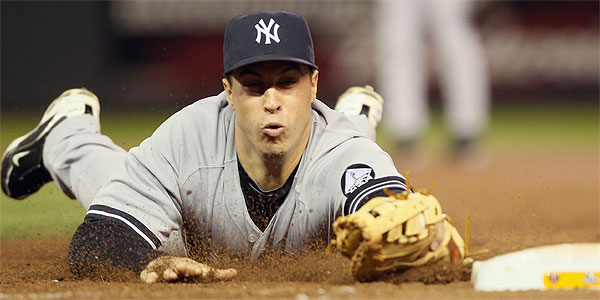
Mark Teixeira’s signing before the 2009 season was a big part of the championship run that year, but it has been largely down hill since then.  Seemingly unable to adjust effectively to the increasing prevalence of shifts in today’s game, Teixeira has transformed into a more and more one dimensional player since that year.  Following the 2009 season, Tex boasted a .290 Batting Average.  Since then (and through yesterday) he’s at .241.  In 2009, Mark took advantage of the short porch in right – posting solid power numbers with 33 and 39 home runs.  Since then, injuries have sapped some of that power – costing him both pop and at bats. – including limiting the first baseman to just 15 games in 2013.

What does that mean for the future?  More of he same if April is any indication.  While the 10 home runs Teixeira has blasted coming into play on May 10th are fantastic, and drive a 153 OPS+, they confirm his reliance on the long ball as his primary offensive weapon.  His batting average is in line with last year’s .216.  One other promising sign is an increased walk rate – a little more than 1 walk per 15 PA – up from 1 per 11 last year.  If that proves sustainable, then Teixeira can be an asset even with a batting average in the .215 range (provided the power keeps up as well).

The biggest danger however is a recurrence of injury.  Teixeira is proving unable to stay on the field every day – last year the team was ill-prepared to handle his absences – giving significant time to Kelly Johnson and Brian MCann last year = along with anther 11 starts to Chase Headley, Francisco Cervelli, and Scott Sizemore.  McCann and Carlos Beltran each made their first MLB appearances at first last season – and on the whole the composite performance of first base for the Yankees was underwhelming.

To address that need this season, and provide insurance for both Teixeira and Carlos Beltran in right, the team brought in Garret Jones in the same deal that netted them Nathan Eovaldi.  Jones has been right around league average the last two seasons, so expecting the same over the course of an extended Tex injuring would be reasonable for this season.  Solid play from both Teixeira and fellow back up Chris Young has limited Jone’s at bats, and his batting line is thoroughly unimpressive so far.  April’s results notwithstanding, somewhere around league average is probably still likely for Jones if he were getting consistent at bats – but the team would do well to leave Jones on a short leash given some of their other options.

The most attractive of those two options are at very different portions of the career spectrum.  Alex Rodriguez has started hot and stayed strong so far this year – while the batting average leaves something to be desired, Alex should be able to replicate Teixeira’s expected production if Mark were to end up on the DL.  His defense in his first start at first could best be described as stiff – but with just 9 innings there during games that matter, drawing any conclusions would be fool-hearty.  Alex’s best role with the team is DH – but if he can handle first it would also allow Beltran the occasional DH start – sure to keep the outfielder healthier and hopefully reignite his bat.

Longer term , there is optimism at first base in the person of Greg Bird.  Bird has hit at every level of the minors since being drafted in 2011 (besides a rough 4 games to start his career that here) – and added a strong Arizona Fall League performance at the end of last season.  He opened eyes this spring as well – but has scuffled so far his year in a return to AA Trenton.  It is clear he could use some more seasoning in the minors, but a few could months could have in the picture late in the year, and knocking on the door of the big leagues in 2016.

All in all, the Yankees have reason for cautious optimism at first base.  Teixeira’s power surge, plus realistic backup options in Jones and Rodriguez paint a rosier picture than last year.  While expecting vintage 2009 Tex this season and beyond would be unrealistic, it should be safe to predict average at worst production from the spot this year, with the potential for plus production likely if Tex can sustain his walk rate and maintain strong power numbers.