Last season, Yankee fans got a taste of the future when Greg Bird stepped in to fill the injured shoes of Mark Texeira. Coming into this season, the picture for Bird was less clear, with relatively strong seasons out of Texeira and Alex Rodriguez – leaving the Yankees seemingly set at 1st and DH – the two easiest spots to get Bird At-bats. Still, given the recent history of the two, it was easy to imagine Bird getting from 300+ Plate Appearances with the big league club if you assume that at least one of Texeira or Rodriguez would miss time with injury (which seems all too likely).
Chance had a different plan in mind, and Bird is now expected to miss all of 2016 with a shoulder injury. Based on my assumption that Bird would have gotten plenty of reps filling in for the Yankees’ DH and first-baseman, this would seem to be a big hit for the team’s 2016 chances.
I would argue that is not the case – the team has done a well the past few off-seasons at building a solid bench to compliment an aging lineup. This is a welcome trend from the last decade, when the bench and bullpen (at least the portion not name Mariano Rivera) seemed like an after-thought, or at best where formerly decent players went to die.
While losing Bird obviously impacts the team’s depth, it should be remembered, the plan was to start him at AAA – of the Yankees potential reserves, he profiled as the best hitter – but his own defensive limitations would have made a roster spot for him a luxury the team couldn’t afford. If Bird could man third and the outfield corners with some ability, he would have been a very useful addition to the bench (along with acting as the emergency catcher – his original position on draft day.) Building up that versatility may have helped the team in the short term, but you could just as easily predict that time spend learning new positions would have detracted from Bird’s growth as a hitter.
Instead, the Yankees projected bench is much more flexible. Gary Sanchez as the likely backup catcher is an unknown quantity, but he has been making steady progress the last few seasons. Having a backup catcher who can hit is a bonus – especially in comparison to the string of defense-first backup catchers the Yankees seemed to employee in a string from Joe Girardi until JR Murphy (and to an extend Francisco Cervelli – though injuries limited his utility.)
Aaron Hicks has big shoes to fill after the last season and a half of Chris Young’s somewhat unexpected productivity. His combination of athleticism and upside would have him starting on a number of teams, and he should be able to adequately cover injuries to Gardner and Ellsbury with limited declines in production – hopefully his presence alone as a spot starter will help keep all 3 outfielders healthy and fresh deep into the season (and avoid the seemingly annual Brett Gardner second-half fade.) Carlos Beltran’s creaky everything will need frequent time off as well – but in his own way, he represents decent depth for the first base and DH options. If either Texeira or Arod go down or need a day off, Beltran to DH and Hicks in the Outfield makes all the sense in the world. The only thing that would improve this option would be some willingness to use either Beltran or Rodriguez at fist base. Despite last years experiment that went no where, I would be willing to bet that one or both of them would make adequate options there – significantly increasing the Yankees ability to adapt to injuries and even the opportunity to rest Texeira and others.
Dustin Ackley is the key reason why the Yankees might not miss Greg Bird this season. Fangraphs recently tabbed Ackley as the second best backup in the American League this year (based on their projections.) His combination of flexibility around the diamond (appearances at 5 different positions), flashes of offensive ability, and first round pedigree make him a strong addition to the team’s bench. In virtually any scenario where Texeira or Alex Rodriguez get hurt, Dustin Ackley is likely to pick up a large amount of At Bats – while he’ll also get some time in the outfield – where he and Hicks can supplement each other very neatly.
The last spot on the bench seems likely to come down to Pete Kozma v. Rob Refsnyder. I’m already on record as saying I would have given Refsnyder the 2B job (with support from Ackley at the keystone as well.) The only advantage Kozma brings to the table is his ability to play short. The backup short stop on the roster will be Starlin Castro however, so having dedicated caddy for Didi Gregorious would be a waste of resources if the player didn’t add much else – which Kozma does not. Refsnyder meanwhile represents strong upside with the bat – coupled with flexibility around the diamond. There is talk of getting him reps at third base this spring, and this combined with his previous experience in the OF makes him the superior choice for that last spot on the bench.
Based on that assessment – what do the Yankees really lose without Bird? The problem is not so much the production/insurance for 2016, but the chance to see ahead to 2017. Whether the at-bats came at AAA or Yankee Stadium, 2016 would have been a big year for Bird to prove himself ready for a full time starting job, all the more important given Texeira’s expiring contract at the end of the year. As it is now, the Yankees will have to make a decision to retain Texeira, hand the starting job to Bird, or look outside the organization for help. Even a repeat of last season should leave the Yankees gun-shy when talking about renewing Texeira’s contract. While he’ll be remembered fondly for 2009 and the rest of his Yankees career – his declining batting average and increasing fragility do not add up to a good investment moving forward. Bird as the heir apparent was the obvious, easy choice – but now the Yankees will have to make that decision with limited data instead. The real cost of Greg Bird’s injury might not become known until Opening Day 2017.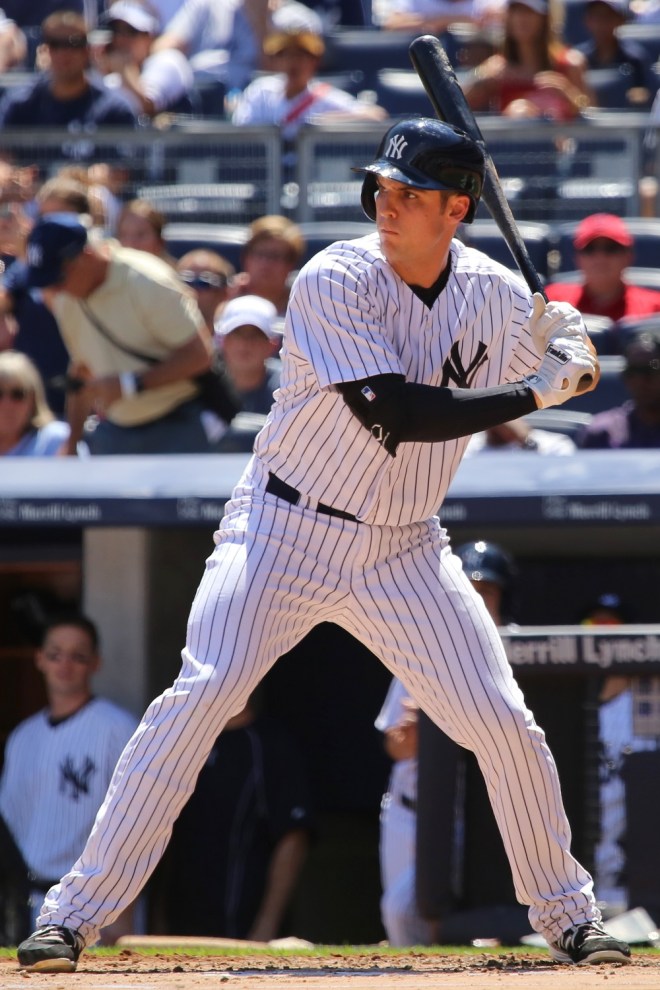
 Blog to be Named Later